



Congratulations! You’ve made your first Steam page or launched your first game. You notice an influx of emails from creators requesting keys to cover your game on their YouTube channel, Twitch stream, or website. Great, right? You eagerly share some keys, eager to see a YouTube video pop up about your game, but it never comes. What happened? Key scammers. If you check the grey market, you’re likely to see all those keys up for sale – without any coverage from a single creator that requested a key.
This happens every single day. Scammers pose as creators, ask for keys to games (especially indies), and sell them on the grey market. Even popular, legitimate key distribution platforms deal with scammers and work constantly to ban these accounts.
At Starfall PR, we see hundreds of these emails for the titles we represent every single month, so we know what to look out for. Follow along to learn how you can protect yourself from future scammers.
Posing as a Large Creator
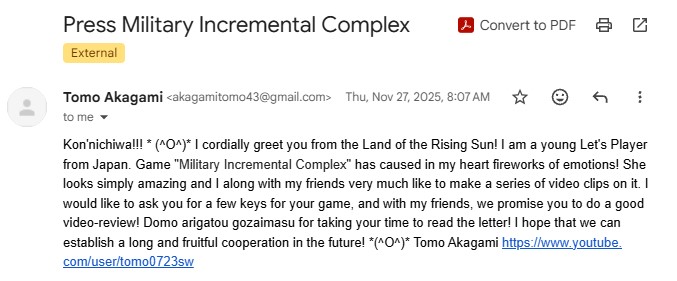
One of the oldest tricks in the book (and one that has been around since at least 2016) is key scammers pretending to be someone else. Most notably, a popular streamer or YouTuber.
This should immediately raise red flags. The reality is, large creators will often outright purchase a game themselves if they’re interested, or they usually expect to be pitched a game for coverage instead of the other way around. So, in 99% of these cases, you have a scammer posing as the creator.
The good news is, there’s an easy way to vet these requests. Almost every prominent creator has their email listed publicly somewhere, on their Twitter/X, YouTube, Linktree, etc. While the sender may have an email address or name that looks official, you’ll find that the emails being used are different. Sometimes it’s something as small as an additional letter. If the email isn’t identical, from the username to domain, it’s likely someone trying to scam you. If you can’t find a public email, err on the side of caution.
Fake “Creators”
Let’s look at another scenario. An email hits your inbox; it’s a YouTuber you’ve never heard of before, but they have 30,000 subscribers and get over 5,000 views per video! You check out their email, and it matches the one in your inbox– success! An actual creator. But is it really?
Key scammers have become more crafty over the years. As technology develops and awareness of their tactics increases, scammers have gone to greater lengths to appear legit, including building a fake presence as a creator, journalist, or other media person. Thankfully, there are a few tells to be suspicious of.
Comments Turned Off
These accounts all use botted view numbers and subscribers to look authentic at a glance, so scammers will often turn off comments to avoid raising too much suspicion. A real creator thrives on engagement and will never turn off their comment section.
Fake Bot or AI Comments
If comments aren’t turned off, you can tell fake ones by their really generic messaging and lack of engagement. The comments-to-views ratio will also be low.
Low Quality and Inconsistent Videos
Because these channels are a facade, you’ll notice that the quality of videos is really poor. AI thumbnails, low-quality gameplay footage that doesn’t follow what’s being talked about, and commentary using an AI voice or an accent that’s very different from the supposed location of the channel. If an AI voice is used, it’s not uncommon for inconsistent voices to be used across their videos. These poorly produced channels would never have meaningful views or subs.
Lacking Relevancy
This is more subtle, but these channels often create videos around AAA or “triple-I” indie games to look legitimate. However, in our experience, creators that play only mainstream games are unlikely to discover, let alone reach out to, a small indie game, so outreach like this is likely a scam. This goes the same for creators that have an obvious preference for specific genres; they will rarely stray from what they like, especially for a small game.
Infrequent Posts
Scammers don’t often try to keep these fake channels updated. They do the bare minimum to pose as legitimate channels and hopefully fool anyone sparing no more than a glance at their platform. Be leery of any creator that hasn’t posted anything new in months but is reaching out saying they’ll produce content.
Key Scams Begin in the Inbox
You can often catch the scam before you even start investigating the channel. Here are some things that should raise eyebrows.
- Weird Formatting – We’ve noticed these emails often use unnatural formatting, such as very short sentences, each starting on a new line, or blocky paragraphs.
- Multiple Emails – Key scammers will often have multiple fake accounts, so their emails will come in waves and may use similar writing.
- Unprofessional Emails – This is anything from hypercasual writing or clear copy-and-paste emails and follow-ups to awkward grammar and poor spelling. An authentic creator understands that requesting a key is a business interaction that reflects on their work, so they will be professional when reaching out.
- Unrealistic Timings – Many of the creators scammers impersonate tend to be located in NA or EU. Something to look out for is when times are unrealistic for those locations.
- Multiple Keys – Asking for multiple keys is immediately a red flag, especially if your game is single-player.
- Steam Curators, Facebook Pages, and other nontraditional platforms – These platforms are easier to spin up and are commonly used by scammers. Steam also offers the Curator Connect program, allowing you to safely share keys with curators. That said, in our experience, even authentic creators on these platforms don’t perform strongly outside of a few specific niches, so we don’t recommend sending keys regardless.
Ultimately, it’s important to use common sense. If something feels off about an email, it’s probably a scam. If you realize you’ve given a few keys away, that’s okay. Continue to keep these tips in mind to protect yourself, and don’t let it sway you from engaging with creators to promote your game.
Navigating key scammers can be intimidating. If you don’t want to deal with key scammers directly, you can consider working with an agency to help alleviate the concern. Starfall PR has connections with all major creators in the industry, and we can help you by vetting for key scammers and communicating with influencers directly. You can reach out to us through our website or by emailing hello@starfallpr.com to get started!
Let's get to work